
Your business grew. The way you run it, didn't!

You're the owner, the final approver, and the answer to every question nobody else can answer. Somewhere between your first customer and your best year, you stopped running the business and started being it.
The Quietly Better Business Assessment finds the one thing creating the most drag on your business right now, and it gives you a six-week plan for fixing it.
Twenty-five questions. About five minutes. Your report lands in your inbox within 48 hours.
FOUNDER'S TRAP
You did not build a bad business. You built a business that outgrew the way it was being run, and nobody sent a memo.
At first, being involved in everything made sense. You were close to the customers, the work, the decisions, and the details. But as the business grew, the same habits that got you here began to create drag.
Now, too much still runs through you. Decisions wait for your approval. Good people hesitate because the rules are unclear. Important improvements stay on the list because every day arrives with something more urgent.
You know the symptoms...things like:
Nobody yanks the yoke
One degree off course doesn't feel like anything. Sixty miles later, you're a mile from where you meant to be.
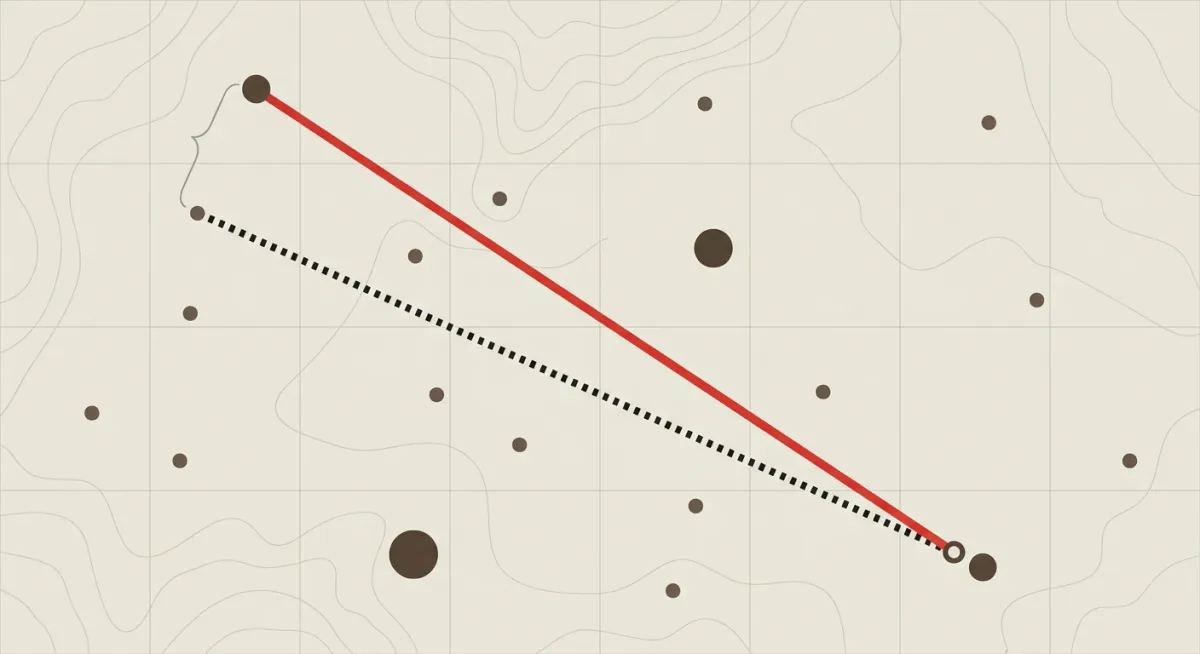
Business drifts the same way. The problem in your company did not announce itself. It arrived one workaround, one exception, one “we’ll fix that later” at a time. Now you are off course, but it is hard to pinpoint when it started.
The correction does not need to be dramatic. Pilots do not yank the yoke; they trim. They make small, deliberate inputs that bring the aircraft back on course and compound in the right direction.
That is what quietly better means. No blow-it-up transformation. No 90-day miracle with a countdown timer. Find the degree you are off. Correct it. Let the improvement compound.
STOP GUESSING WHICH FIRES TO PUT OUT FIRST
Twenty-five questions. One clear priority.
Most owners already have a list of things to fix. The hard part isn't finding problems... it's knowing which one is actually costing you.
Your quietly better business report gives you:
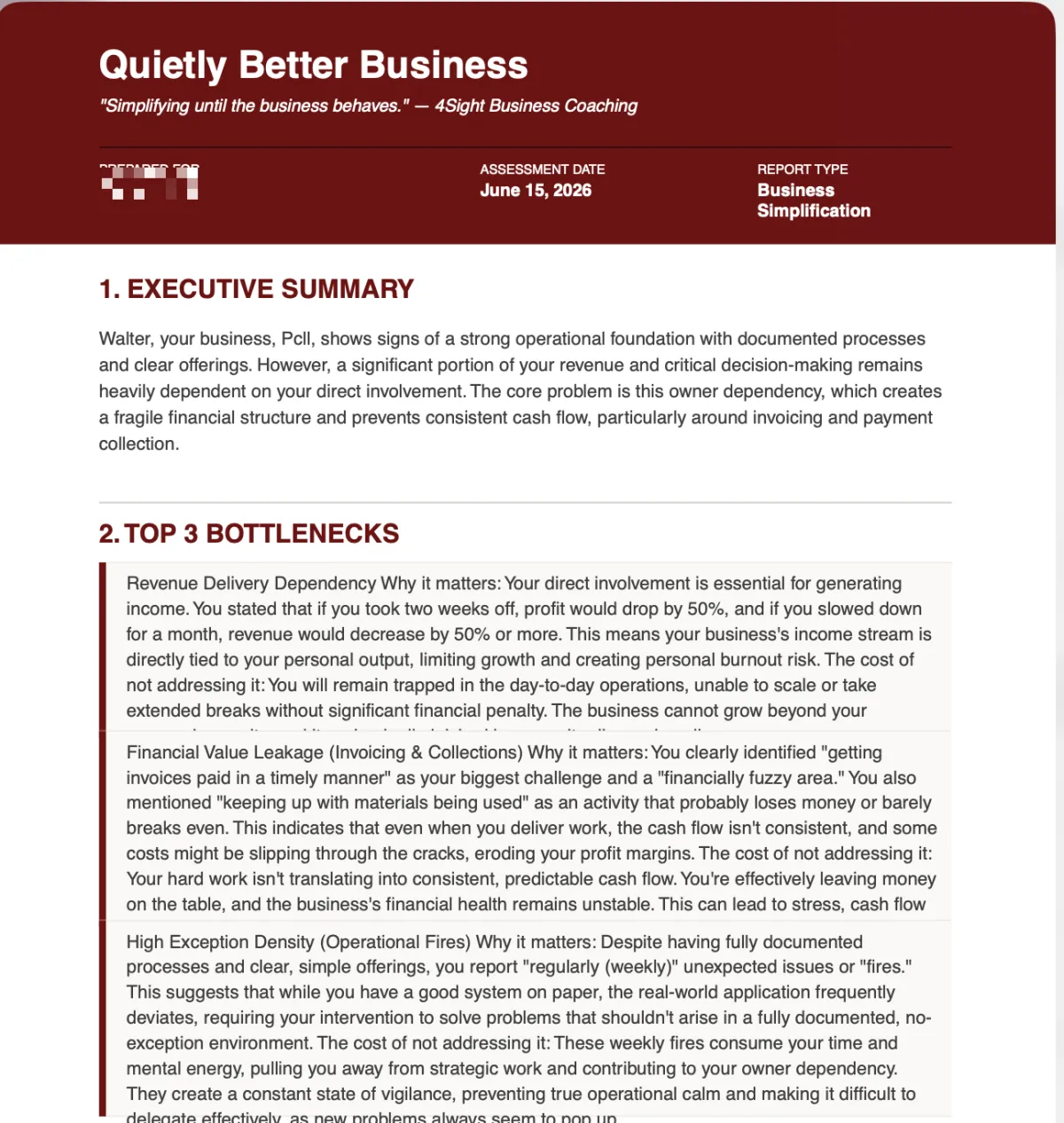
Your top three bottlenecks: What they are, why they matter, and what it costs if they remain unchanged.
Where you're the constraint: The specific places the business stalls without you, and which of those are worth addressing first.
Strengths worth protecting: Half of good advice is knowing what to leave alone.
The single most important focus: One priority. Not a wish list.
A six-week action plan: Practical, week by week, with real tasks. Not "improve communication." More like "map your invoice-to-cash process and find where it stalls."
Your answers run through the 4Sight diagnostic framework. I read every report before it goes out, then send it to you personally within 48 hours.
No score. No dashboard. No cheerful suggestion that you delegate more.
One diagnosis. The right kind of improvement.
The assessment does not prescribe the same answer for every business. It helps identify the constraint creating the most drag—then focuses the work where it will matter most.
Depending on what the business needs, that may mean clarifying your marketing, improving the customer experience, developing leaders and employees, strengthening sales execution, or building operating systems and processes that do not depend on you remembering everything.
The work changes. The goal does not: a business that works better for your customers, your team, and you.
IT'S TIME TO THINK DIFFERENTLY.
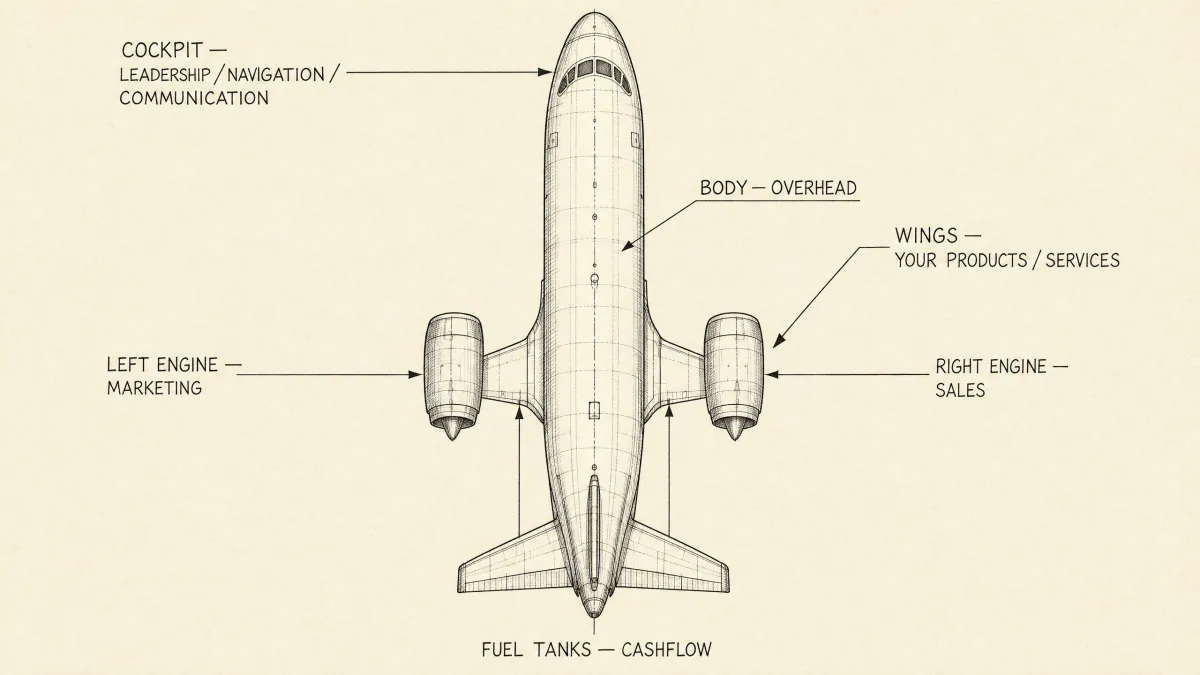
YOUR BUSINESS IS LIKE AN AIRPLANE
One weak system makes the whole flight harder than it needs to be.
I spent thirty years in business before I learned to fly. Flight training rewired how I see companies.
An airplane doesn't have a marketing problem or a cash problem. It has systems that either work together or fight each other.
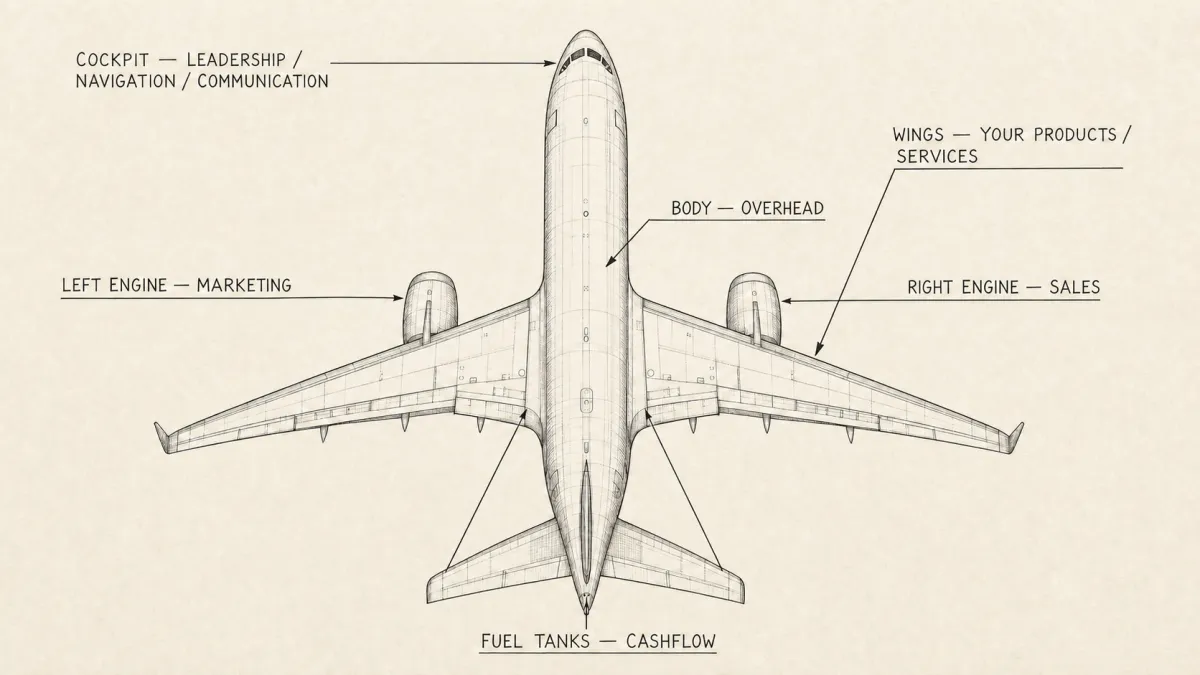
Cockpit — Navigation and communication. Does everyone know where you're headed and what matters this quarter?
Right engine — Are the right people finding you on purpose and does the experience they receive match the promise that brought them in?
Left engine — Do qualified opportunities become profitable customers through a clear, consistent process?
Wings — Products and services. Does what you sell create lift? Does your team have the clarity, skill, and ownership to deliver it consistently?
Body — Overhead. Is the business hauling weight it doesn't need? Can good work be repeated without relying on memory, heroics, or a growing pile of exceptions?
Fuel tanks — Cash flow. Do you have enough fuel to make decisions from strategy instead of panic?
A “sales problem” can begin with unclear marketing. A “team problem” can be a process nobody has documented. A customer-service issue can point to unclear expectations, capacity, or leadership.
The assessment helps identify the system actually causing the trouble. Then we address that first.
WHAT IT COSTS TO LEAVE IT ALONE
You stay the constraint. The business grows to the edge of your personal capacity and stops—not because demand disappeared, but because you ran out of Tuesday.
Good people can leave when expectations stay unclear and they have to keep guessing how to succeed.
The same problem keeps billing you. Every undocumented process is a recurring charge you never approved. You pay it in interruptions, rework, missed follow-through, and opportunities that keep waiting for you.
And when a company only runs because you are in it, it is harder to sell or step away from as an asset. It begins to feel less like a business and more like a job with a filing cabinet.
Not all of that appears on a P&L. All of it appears on your calendar.

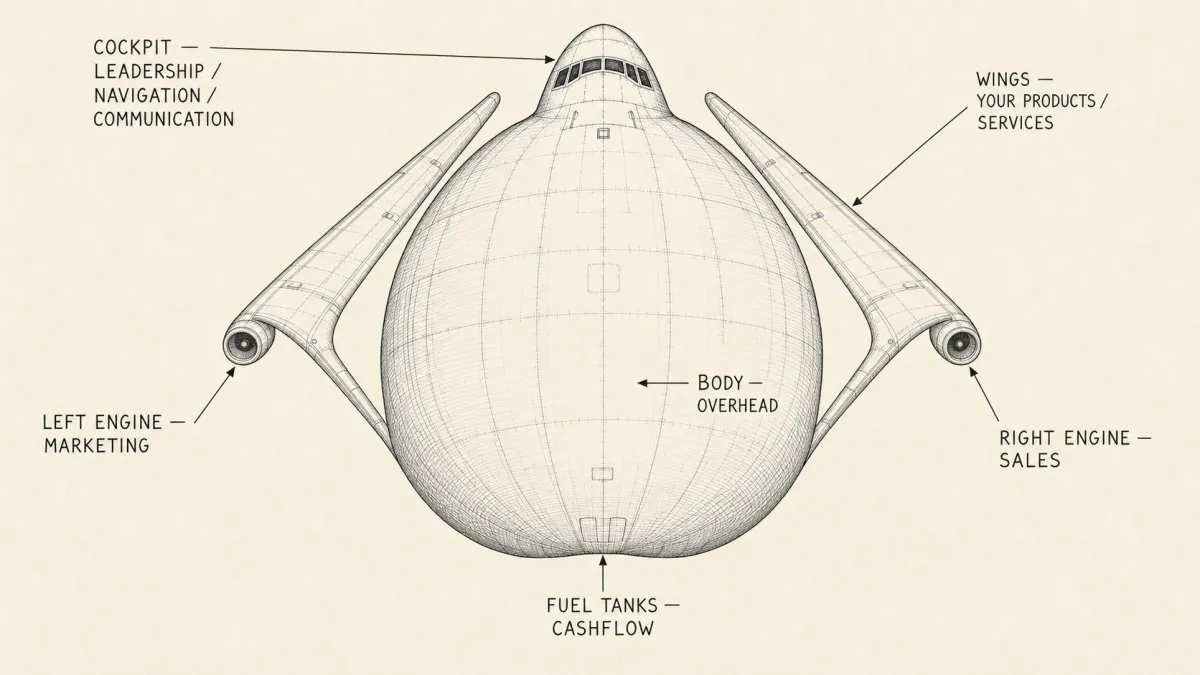
If you were going on vacation, would you get on either of these two? Remember, your business's ONLY job is to get you to where you want to go. Just like an airplane.
THINK OF ME AS A FLIGHT INSTRUCTOR FOR YOUR BUSINESS
An instructor doesn't fly the plane. He makes sure you can.
For more than 30 years, I have worked in and led businesses of different sizes, including manufacturing operations, sales, and marketing. I have started and sold a business. I have also made enough mistakes to recognize the ones owners should not have to repeat.
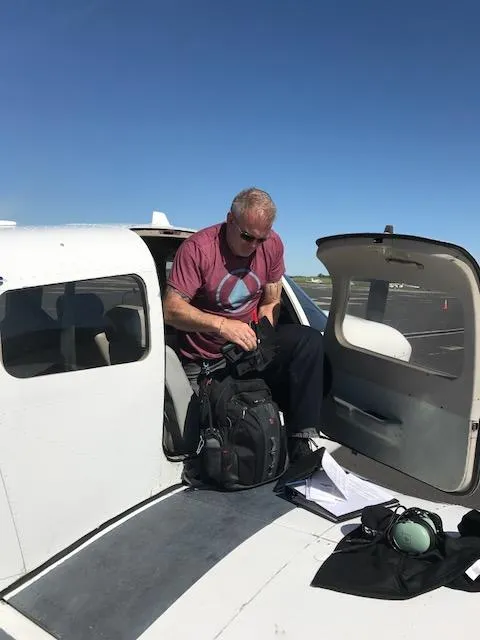
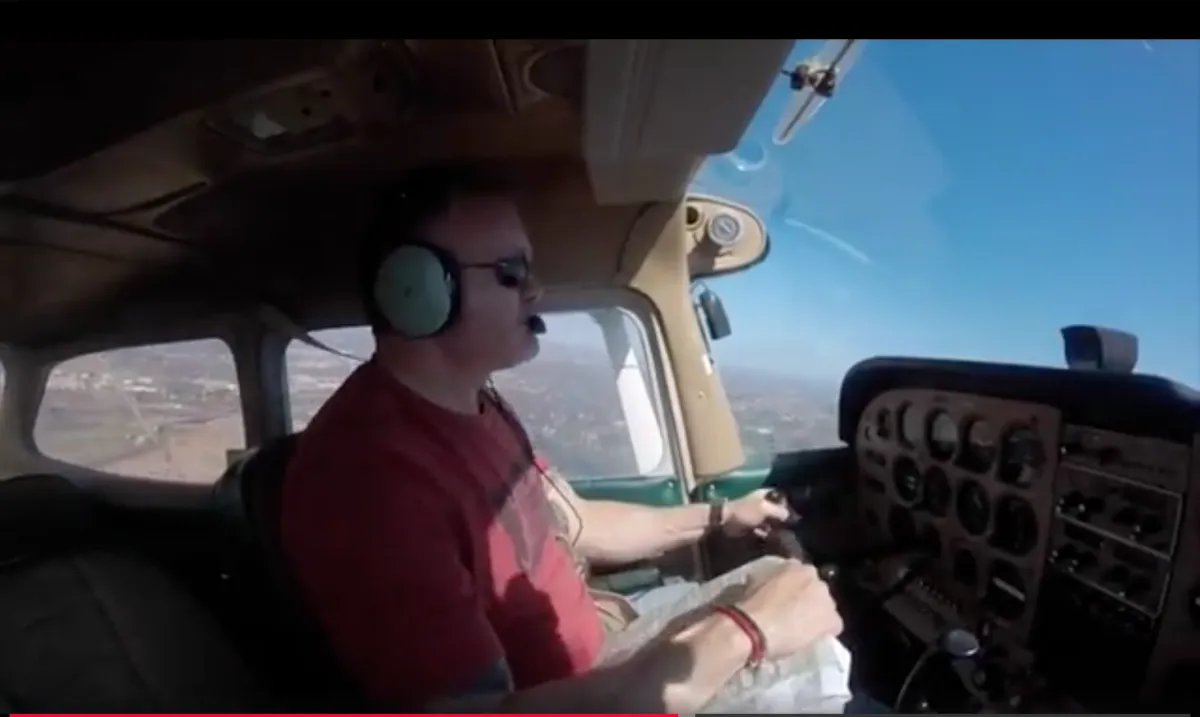
Then I earned my pilot’s license, and the connection became clear.
Flying is a series of small, disciplined decisions that keep the whole system stable. So is running a company.
A good flight instructor teaches you to read the instruments, plan the flight, handle weather you did not expect, and build the judgment to fly without someone sitting in the right seat.
That is the job here. You stay in command. I help you see what is happening, decide what matters, and build the systems, leadership habits, and operating discipline that keep the business from depending on you to remember everything.
A second set of eyes is not a white flag. It is what serious leaders use when they intend to get better.
Start with a clear view of what needs attention.

Take the assessment. Answer 25 questions about how the business currently operates.

Receive your personal report. I review your answers and email your results within 48 hours.

Choose your next step. Use the six-week plan to begin the work yourself, or talk with 4Sight about whether more hands-on coaching is the right next step.
Take five minutes. Find the degree you are off.
Twenty-five questions. About five minutes. A personally reviewed report within 48 hours. One clear priority and a six-week plan for correcting it.
Nothing dramatic. One meaningful correction, made on purpose.